


In mines and large-scale vertical shaft projects, towering derricks are essential core components of the lifting system. It is like a powerful steel arm, supporting the celestial wheel and guiding the steel wire rope to complete lifting and lowering operations. According to their different purposes and service lives, derricks are mainly divided into two categories: permanent derricks and drilling derricks.
1. Permanent derrick: the permanent backbone of a mine
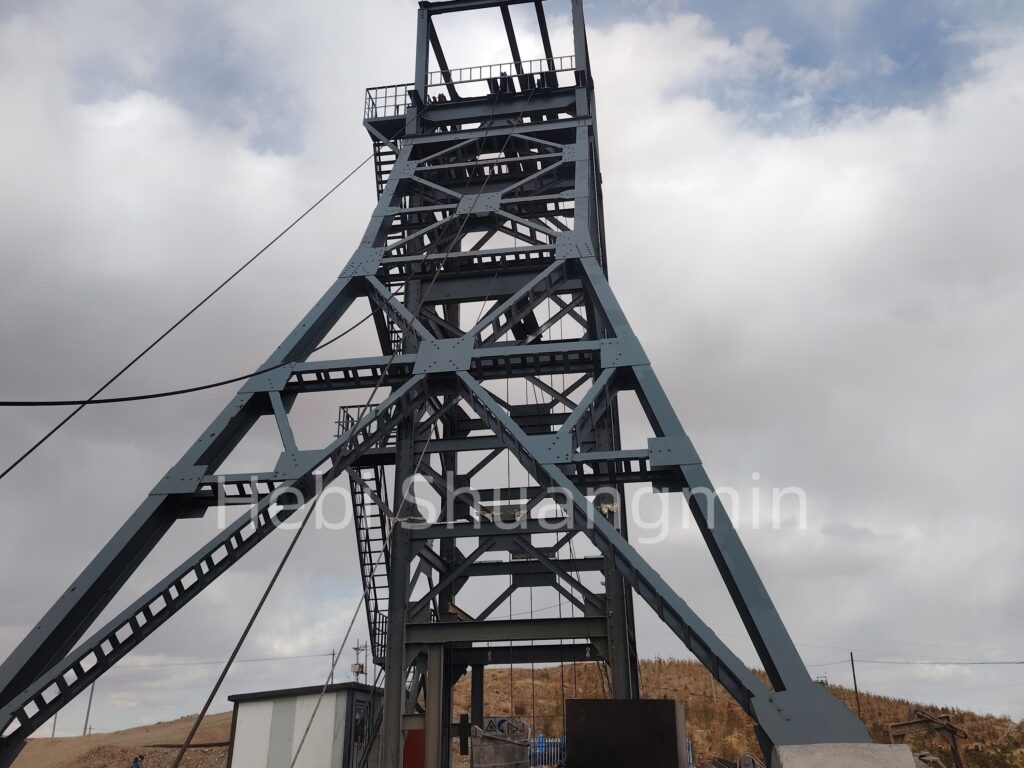
Permanent headframes, also known as production headframes, serve the mine throughout its entire operational life. Following mine completion, they actively support daily production and operations. Furthermore, their robust design ensures long-term reliability and safety. Ultimately, these structures enable efficient and continuous material and personnel transport.
At the core of its mission is the hoisting of ore, equipment, and personnel. Consequently, it functions as the mine’s critical artery for daily operations.
Engineered for long-term service, it utilizes high-strength, corrosion-resistant materials. This approach ensures exceptional sturdiness, stability, and durability. Furthermore, large steel structures or concrete are typically employed for robust construction. The designs are also highly versatile, commonly featuring A-frame or four-column configurations.
It must possess a high load-bearing capacity to handle peak production demands. Additionally, excellent wind and seismic resistance is crucial for safe operation in severe weather. Finally, the structure is designed for straightforward maintenance, ensuring reliable performance for decades.
In short, the permanent headframe serves as the mine’s “public face” and its “enduring backbone.” Ultimately, it symbolizes stable and highly efficient production.
2. Drilling winch: the pioneer of mine construction
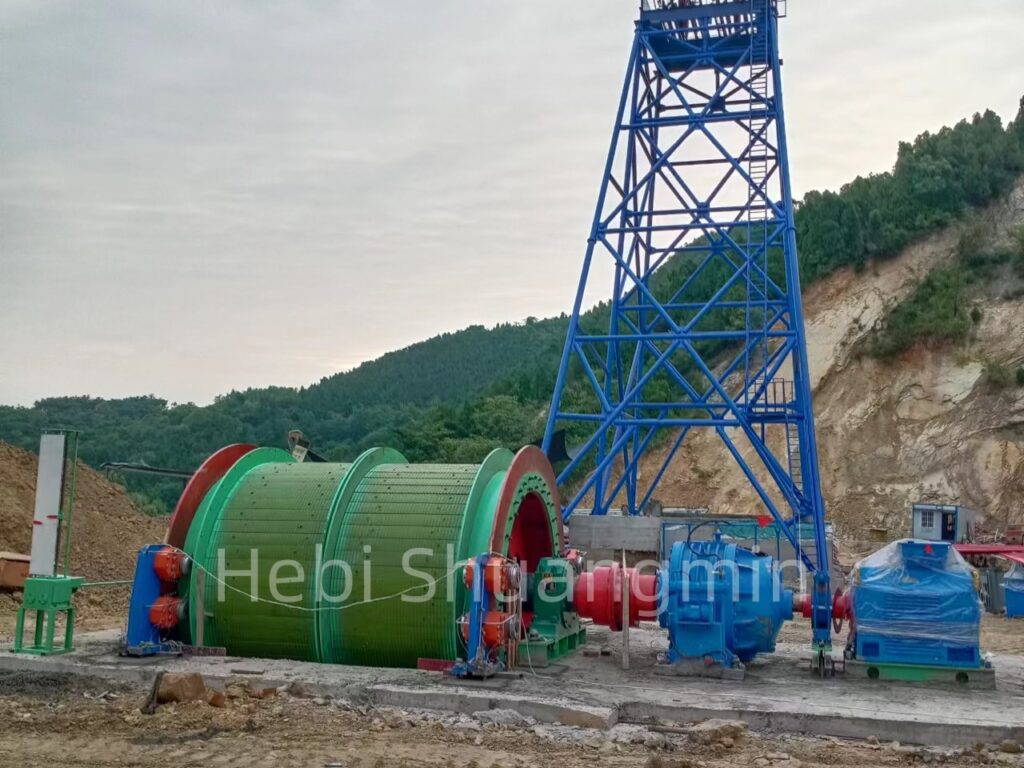
The sinking headframe, as its name implies, serves the critical sinking stage. Therefore, it is engineered as a temporary yet vital structure.
Its primary mission is to handle the critical tasks of hoisting muck, personnel, and materials during shaft construction. Consequently, it spearheads the entire mining project as the pioneering force.
The structure is engineered for quick installation and dismantling using modular components. Moreover, its relatively lightweight design maintains all necessary strength and stability. Ultimately, it is engineered to provide robust support throughout the construction phase.
The design prioritizes quick assembly and teardown, maximizing efficiency and minimizing costs for repeated use. It also handles diverse, temporary hoisting needs with great flexibility. While smaller than permanent headframes, its capacity is perfectly suited to all development-stage requirements.
Simply put, this structure serves as the dedicated platform for initial mine development. Consequently, it focuses on enabling teams to complete shaft excavation swiftly and securely.
The core distinction lies in their service life: one is temporary, the other permanent. They operate like a relay team with clearly defined roles. The sinking headframe runs the first leg, establishing the initial foundation. After completing the shaft, this team player is relocated for its next project. Then, the permanent headframe takes the baton for the long term. It stands firmly over the shaft for decades, reliably supporting all mining production. Although their missions differ, both are absolutely vital to mining development.
