


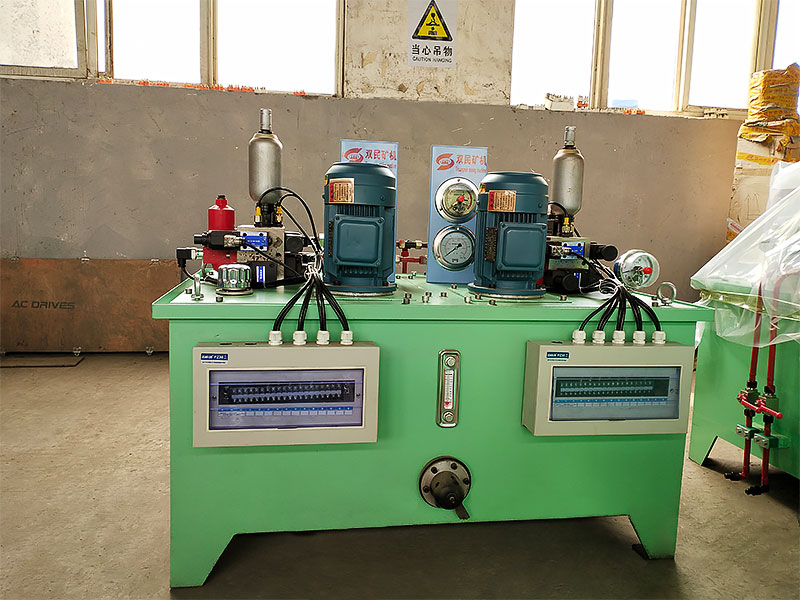
The hydraulic station of mine hoist is controlled by programmable controller (PLC) and programmed according to the action process of hydraulic station
1. Normal working brake: After starting the motor of hydraulic station, it is in normal working state. The magnitude of its braking force is adjusted by adjusting the current of electro-hydraulic proportional overflow valve to adjust the system pressure.
2. Safety brake in well: It is before the lifting container is in place, that is, before the parallel port container is in place signal is closed, the AC contact signal is closed. In order to meet the requirements of braking deceleration, secondary braking is adopted.
3. Safety brake at wellhead: It is when the lifting container is in place signal is closed and the AC contact signal is closed again. At this time, emergency braking is adopted to prevent the occurrence of vicious accidents.
4. Rope adjustment: In the rope adjustment state, switch on the switch and push the adjustable brake handle to open the rope adjustment clutch. Then switch to rope adjustment state, pressure oil enters pipe B, open the fixed drum brake of hoist, and hoist can start to adjust rope. After the rope adjustment is completed, switch to clutch closed state and close the rope adjustment clutch.
5. Solenoid valve fault detection: Each solenoid valve in the hydraulic station is equipped with a valve core detection sensor. When the solenoid valve fails, a fault signal is issued, safety braking is implemented, and an alarm or display is performed through the PLC.
6. Residual pressure protection: The residual pressure protection signal needs to work together with the parking signal. If the parking signal is closed and the residual pressure is higher than the set pressure value, safety braking is implemented.
Temperature alarm, differential pressure alarm: When the oil temperature is too high or the oil filter pressure difference is too high, the temperature alarm signal or the differential pressure alarm signal is closed and reported or displayed through the PLC.
